Do children need skincare?
First of all. There is a HUGE difference between a 10-year-old without a pimple in sight and a fourteen-year-old with breakouts and possibly a make-up routine.
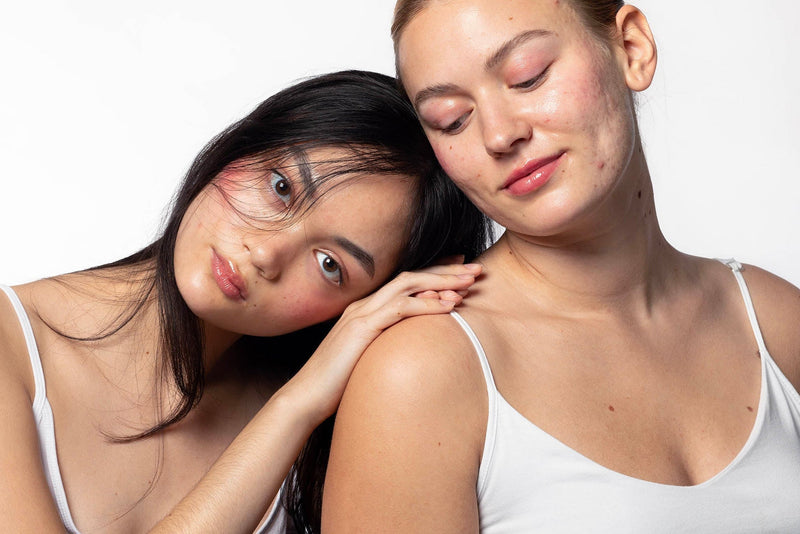
We need to define what is children's skin and what is teenage skin. Skin changes during puberty due to a major hormonal shift in the body that also affects the sebaceous glands in the skin. Up to 90% of teenagers are affected by acne – ranging from mild to severe – at some point.
Read here about teenagers and acne
Children, who have not yet reached puberty, do not need skin care (except for moisturisers or special creams if they are dry and, of course, sun protection before UV exposure).
All the functions needed for healthy skin are already built into healthy young skin, such as cell shedding, cell renewal, and optimal collagen synthesis.
It’s when hormones change that skin changes too. When you enter puberty and your sebum production increases, you may develop pimples, blackheads, or problems with oily skin. Now’s the time to set a good basic routine that you can stick to.
Having a good basic routine is 10,000 times more important for the skin's well-being than having a long list of viral products that you mix without any real "game plan". Skincare must be used consistently to be effective, and if you have too many different products without a consistent routine, you can both miss out on the great results that a product can give if used as intended, but also overload the skin (and your parents' bank account!). We love the concept of "skin streaming" – consistent use of multi-functional, everyday skincare products chosen for your specific skin goals.
Is it harmful for children to use skincare?
Like everyone working with skin health, I agree that it is worrying that children, i.e. children who have not yet reached puberty, use products that are often developed for the challenges and needs of adult skin.
I’m the first to agree that skincare products and self-care routines can provide both a sense of belonging and positive emotions (nothing lifts my mood like an “Everything shower”, dousing myself in lovely lotions or unboxing the latest “it-product”!) , but from a skin point, children and skincare are a "If it ain't broke, don't fix it" situation.
Here’s the thing.
Young, healthy skin already has optimised cell renewal, a dense cell matrix and a full collagen account. A child's skin does not need glycolic acid, strong AHAs and other powerful ingredients often used in skincare for adult or mature skin, that has started to show signs of aging or sun damage. Many so-called anti-aging ingredients, such as certain peptides designed to combat age signs, are not dangerous, but completely unnecessary when you already have undamaged skin with healthy, strong cells and all functions in peak condition.
Also, as a a child or teenager, you may not have the patience to read and follow detailed instructions, and there is a risk of "cocktail mixing" ingredients and products that are not only unnecessary, but in combination way too strong for the skin.
At worst, too strong products can disrupt the skin's barrier and the microbiome's vital immune defence. The dermatologists and skin therapists we work with at Common Clouds daily see the consequences of young skin that has been over-treated, such as acne, eczema, allergies and hypersensitivity.
Exfoliating acids in particular - which are pure MAGIC when used correctly! - can lead to over-exfoliation, disrupting the skin's outer barrier (read all about our amazing barrier here!). Many of the products that have gone viral lately contain AHA or glycolic acids which can be far too potent for young skin, especially if you don't know how to use the product (in general, BHA or PHA should be the acids of choice for young skin with blemishes).
Some acids also increase sun sensitivity, and from my experience, children and teens are not the most loyal SPF users (at least not in my house!).
At the same time, it's important to remember that previous generations, like mine in the 90s/00s, overused stripping, harsh cleansers and toners that reeked of alcohol, so we've come a long way ;)
What is a good skincare routine for teenagers?
Cleansing, moisturising and SPF are a great way to start.
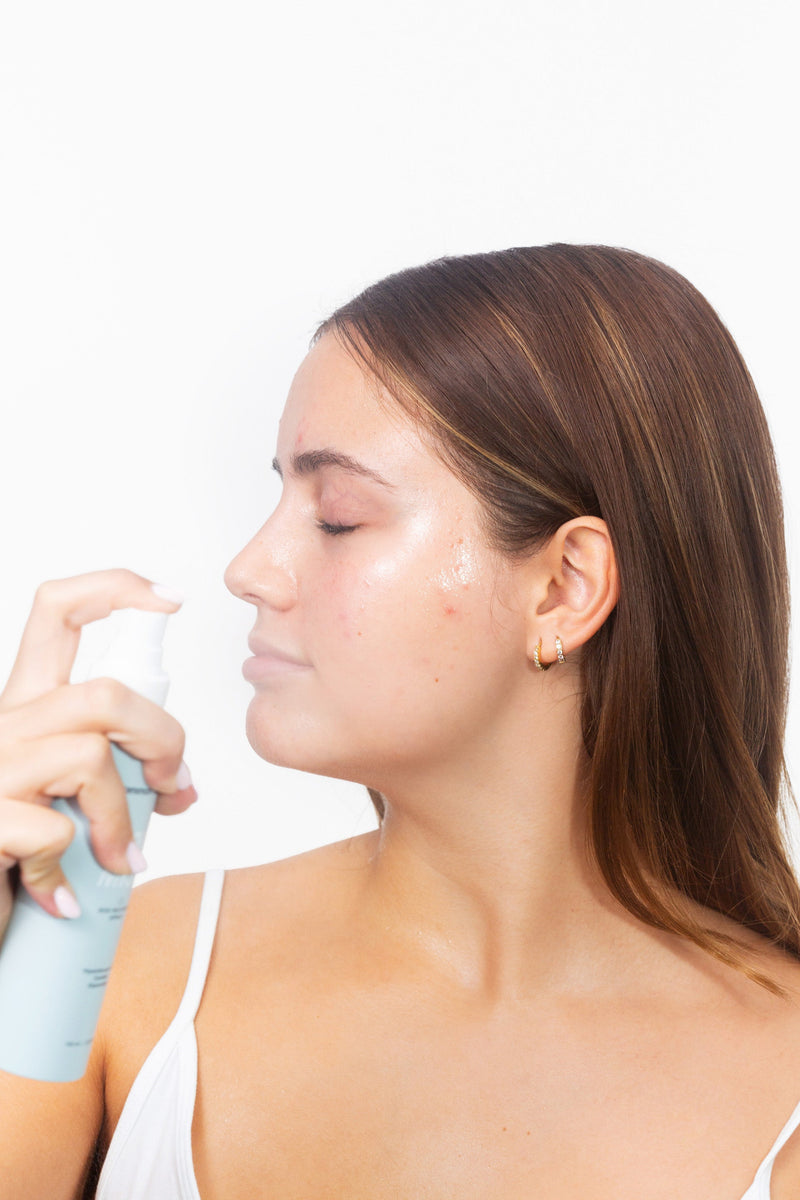
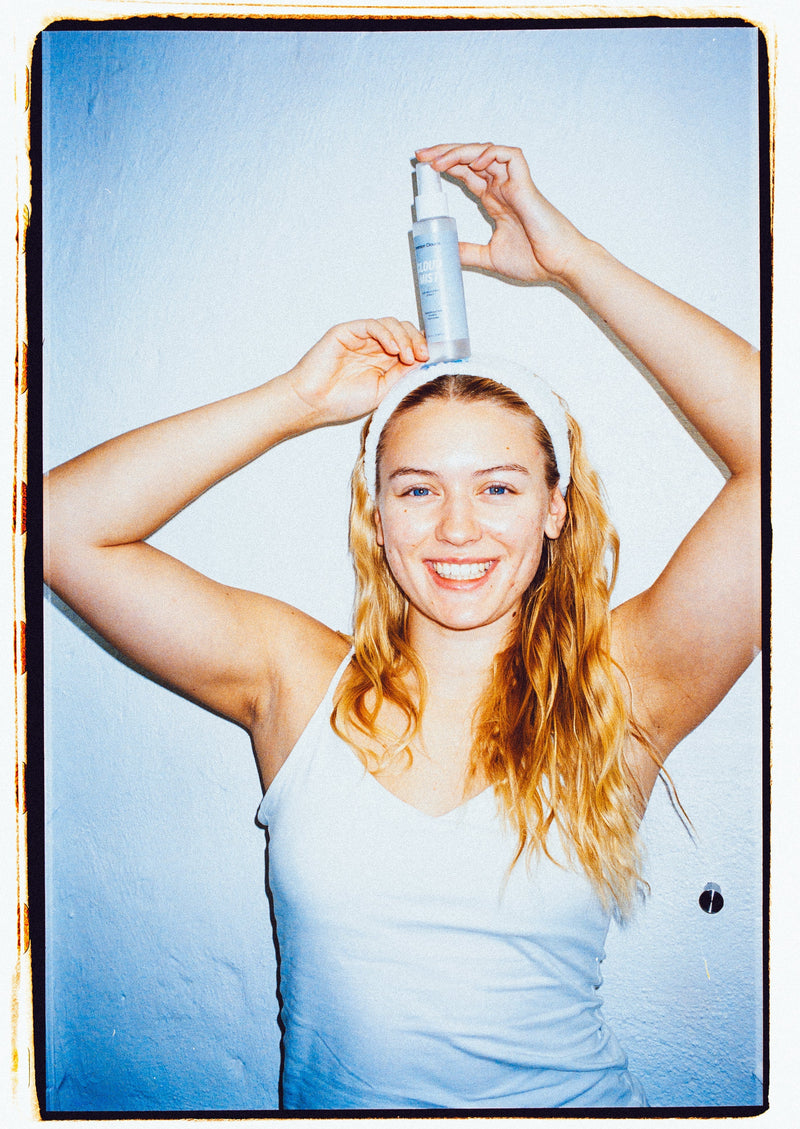
I If you've started wearing make-up, it's vital to cleanse your face every night to prevent clogged pores and breakouts, and then moisturise your skin. If you have pimples or blemishes, using a gentle exfoliator, such as Cloud Water, about 2-3 a week will be very helpful. Cloud Water also helps with pimples on the back, so called “bacne”, that is common in both teenage boys and girls.
Check out our skincare bundle Teen Starter kit for oily skin here!
A good routine for teenage skin that has entered puberty is:
- CLEANSE. Daily cleansing to remove makeup and excess. Use a gentle face wash like Cloud Wash.
- EXFOLIATE. For acne-prone skin, gentle exfoliation with BHA acid a few times per week (start 2 times/week) will help to dissolve excess oil and dead skincells trapped in pores, which helps to prevent pimples. Our BHA-toner Cloud Water is made to be highly effective while being ultra-gentle and non-irritating.
- TREAT. Pimple patches are amazing to spot treat, protect and conceal pimples. It’s SO important not to squeeze pimples - squeezing can exacerbate the inflammation and leave long-term scars that are difficult to treat. Cloud Patch and Moon Patch is ideal for pimples at any age. Troubled skin is also often helped by azelaic acid – a very gentle, microniome-balancing acid that is suitable for sensitive skin. You'll find it in our soothing serum Cloud Milk.
- MOISTURISE. Daily moisturising is a much, even If you have oily skin. Our hydrating and soothing gel moisturises Cloud Jelly is an ideal beginner's moisturiser.
- PROTECT! Sunscreen is often the last product prioritised by young people, but trust me - sunscreen is the best long-term investment for your skin. Cloud Screen is designed to protect, hydrate and support acne‑prone and sensitive skin – without heaviness or clogged pores.
Common Clouds skincare is made for acne-prone, but also sensitive, skin.
So how harmful is skincare?
Skincare can be extremely helpful to people with skin concerns, such as mild acne (more severe acne needs a medical consultation), redness or post-blemish marks.
Skincare is also joyful and a way to connect with other people. As a teenage mum, I must say it's a rather wholesome hobby, and I'd rather see my daughter indulging in a multiple-step skincare routine than some other things I indulged in the late 90s ;)
However, the barrier can indeed be disrupted by excessive use or too strong products, and money can, from a skin point of view, be thrown in the pond (just like when we buy other things we "don't really need").
What can i do as a parent?
- Like everything that concerns our kids, we as parents have a responsibility to gather facts and guide our children, not getting alarmed.
- Help your teenager to build a routine with products that are formulated for the skin concern your teen want to address.
- Do research together, and read up on how the product is supposed to be used.
- Always use a product as it is intended – for example, a product intended a few times a week should never be used twice a day.
So, to conclude:
- There’s a huge difference between a child’s and a pre-teen’s/teenager’s skin.
- Healthy, young skin have all function’s they need built in.
- During or after puberty, teenage skin often need a helping hand, especially when excess oil, pimples, blackheads and the likes are present.
- Skincare can also have a positive impact through bringing a sense to belong or giving self-care.
- However, over-using too harsh products or over-exfoliating skin can disrupt the skin barrier and lead to problems with over-sensitivity, acne, dryness, rosacea and eczema.
- Believe in science, not fear-mongering. Gather facts and make informed choices.
- Choose products that are made for the concern you are looking to address. Gentle exfoliating acid and even some clinically tested retinoids (such as the one used in Moon Balm) can ber very helpful for young skin (when used as intended – always read the label!). Common Clouds products are formulated from start to be gentle enough for even young, acne-prone skin.