What is the skin barrier?
The skin barrier can in the simplest terms be described the outermost layer of the skin. It acts your the skin's – and body's – first line of defense against outer aggressors like harmful microorganisms, pollution and bacteria. But when we look deeper, the skin barrier is made up of both physical and chemical components:
Stratum corneum – The uppermost part of the Epidermis, also known as the Horny Layer (and we love it even more for it!). The stratum corneum, or SC as we prefer to call it, is a physical, protective barrier made up by keratin-filled dead skin cells (corneocytes) that are continuesly shed and replaced by new ones. It's almost like a brick wall between your skin and the outside world.
A healthy stratum corneum will shed approximately one layer of corneocytes each day. The corneocytes will then be replaced with new keratinocytes from a lower layer of the epidermis.
Acid Mantle – This crucial part of your skin barrier (with the very cool name!) is made up by a cocktail of sebum (oil produced by your sebaceous glands) and amino acids from your sweat. Together, they form a thin, antimicrobal, film that protects again harmful viruses, bacteria and other microorganisms.
Microbiome – On your skin lives trillions of bacteria and fungi that makes up your skin's very own personal ID – the microbiome. Our microbiome changes all the time, it's like a living costume that you wear all the time. But in order to have healthy skin, we need to feed the good bacteria, and make sure they can defend themselves against unwanted bacteria, like an overgrowth of certain acne bacteria. The microbiome – also known as skin's micro flora – is your skin's immune system.
Why is the skin barrier important?
The skin barrier’s main functions are keeping good stuff IN, and bad stuff OUT:
A well-functioning skin barrier...
- Prevent moisturie loss (the fancy word being Trans-Epidermal Water Loss, or TEWL) and lock hydration inside skin.
- Protect us from harmful bacteria and other pathogens, pollution particles and other baddies than can trigger inflammation and irritation in the skin. If you have acne or any other inflammatory skin condition, you want to be extra careful about your barrier.
How do i know if my skin barrier is damaged?
Common signs that your skin barrier is out of balance are:
- * Sudden or worsened breakouts (acne)
- * Skin feels tight and dry, or even itchy.
- * Redness.
- * Skin feels irritated, and you might experience flare-ups if you have inflammatory conditions, like exzema, acne or rosacea,
- * Excessive sebum production.
What causes damage to the barrier?
Do you suspect that your barrier is damaged, and wonder why?
There’s many reasons why the barrier loses it’s balance, and some of us are genetically blessed with a weaker barrier.
Common reasons why the barrier is off-balance are:
- Too harsh and drying skincare, like some sulphates (SLS and SLES) and certain alcohols.
- Over-washing or over-exfoliating your skin. We know it's so tempting to try every product that goes viral on TikTok, but be careful to not include to many active ingredients, like exfoliating acids, in your skincare routin at once.
- Never EVER wash your face with soap not intended for your face. It will throw your pH balance off the chart. Just. Don't.
- Living in a polluted area is linked to a weaker skin barrier. If you live in a polluted area, make sure to included antioxidants in your daily skincare routine (like Vitamin C, niaciacinamid or even centella).
- Medications, like antibiotics can temporarily change the microbiome. However, take them if needed, your barrier will recover!
- Long-term stress or lack of sleep. The stress hormone cortisol is known to weaken the barrier.
- Our barrier function is actually slightly imparied right before and at the beginning of our period. In this article you'll learn how to sync your skincare with your menstrual cycle.
What can I do for a stronger barrier? Can I repair a damaged skin barrier?
Thankfully, our barriers are quite easy to please. Here’s some tricks from our tried-and-tested tool box:
First of all, LESS IS MORE if you suspect that you're barrier is damaged. We love the TikTok practice of #SKINSTREAMING.
- Use a gentle, non-stripping, pH-balanced face wash that won't strip your barrier, like Cloud Wash, our gentle but effective daily face cleanser.
- Go easy on exfoliation and avoid mixing to many exfoliating products in your routine. If you are under the age of 25, you probably don't even need the big guns like glycolic acid or high concentrations of AHA, that mainly tackle age concerns. Cloud Water uses the BHA-acid Salicylic Acid, which is ideal for breakout-prone or oily but sensitve skin, and is a great way to get all the benefits of exfoliation (clearer pores! smoother skin! less prone to breakouts! more even-looking skin tone!), with minimal risk of irritation thanks to it's many calming actions. Use Cloud Water 2-3 times/week and gradually increase if you want to ramp up the results, but don't use it more than once a day and always listen to your skin.
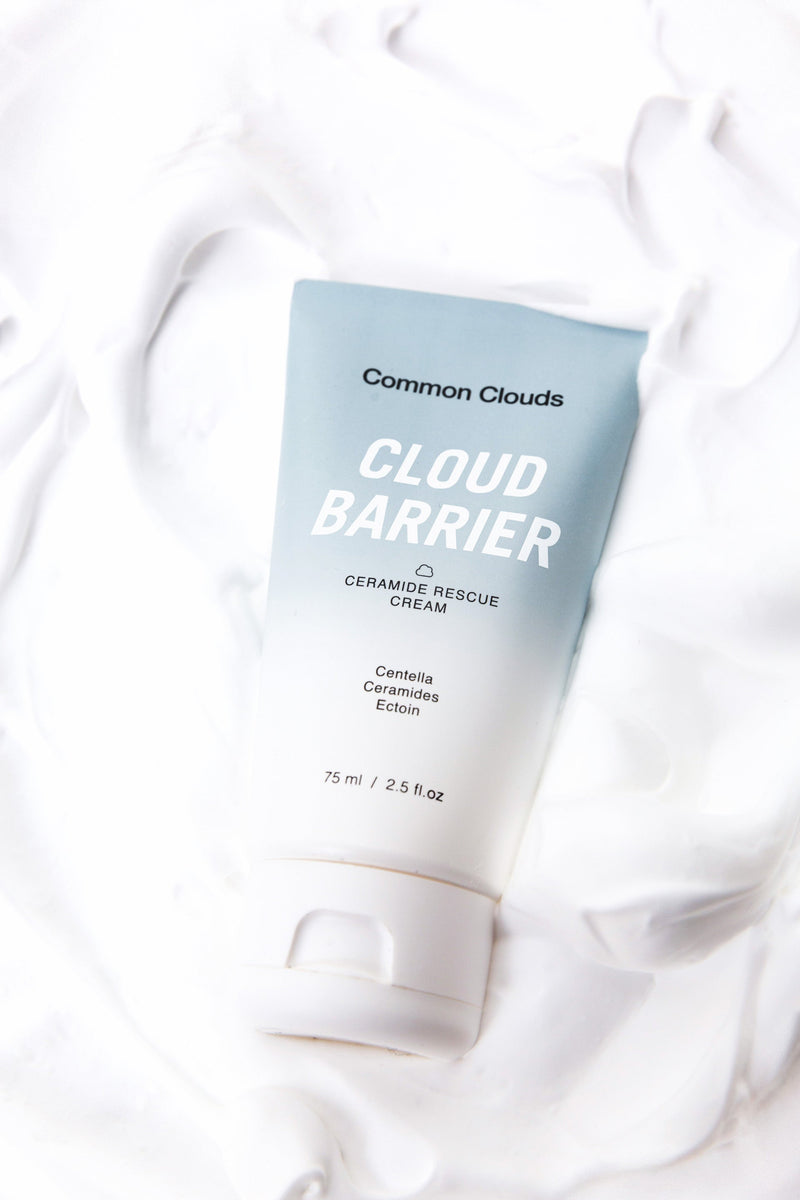
- Look for barrier-strengthening ingredients like ceramides, niacinamide, glycerine, squalane, hyaluronic acid, pre- pro- & postbiotics and centella. Cloud Barrier is a ceramide moisturiser for sensitive and acne‑prone skin, clinically proven to strengthen the skin barrier in just 1 hour*.
- Avoid fragranced skincare if your skin is sensitised.
Beyond skincare, you can also help your skin barrier from within.
The skin microbiome and gut microbiome are linked, so feeding your inner micro flora will show on your skin too.
- Try to be gentle of yourself. Since stress is linked to weakened barrier functions, make sure to give yourself enough sleep and allow yourself to de-stress. Practice the art of being good enough.
- Nourish your body. Eat your greens and healthy fats from fish, nuts and olive oils - they’re packed with skin-supporting nutrition.
- Eat probiotic foods - like kimchi or yoghurt - or take a daily probiotic (or both). Vegetables, fruits, legumes and wholegrains are packed with prebiotic fibre that feeds the healthy bacteria in your gut.
- Go easy on sugar. Sorry, we know it's a bummer :( Sugar is known to drive inflammation in the body, that can also impact the skin.
How long does it take to repair a damaged skin barrier?
The good news about wearing a human, living raincoat is that it can heal! You just need to be patient. If your barrier has been weakened by external factors like environmental stress or using too harsh skincare products, you will notice that it gets better 2-3 weeks after pairing back on strong actives and going back to basics (wash. hydrate. SPF). Your skin will be less reactive, feel less dry and tight, and in general feel stronger. But don't be temped to start experimenting with your Closet of Viral Beauty Products or introducing new, strong products just yet.
Expect 1-2 months to get your skin back to normal. However, it can take as much as up to 6 months.
Start to re-introduced actives, like acids and retinol, slowly. We LOVE acids and retinol (magic workers!) but introduce them one at a time and listen to your skin.
What is the difference between a damaged barrier and a "purge"?
Happy you asked! Sometimes when you introduce a new active, like acids or retinol, your acne or dryness can get worse before it gets better.
In this article, we look into the difference between a skin purge and a damaged barrier.
We hope this article gave you some new insights about our amazing skin barrier.