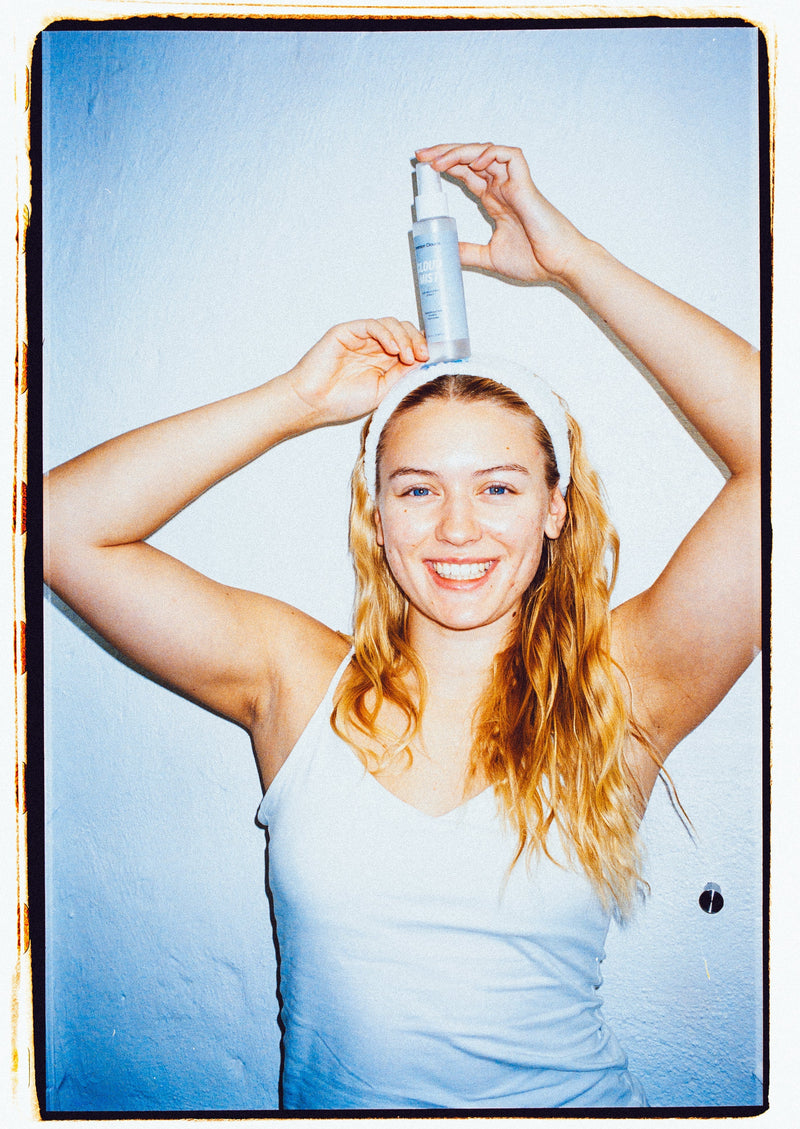
Everything you need to know about Hypochlorous Acid - the "it"-skincare ingredient that calms, protects and balances the skin
By Maria Ahlgren, Common Clouds
Hypochlorous acid is the skincare ingredient everyone is talking about right now – and for good reason. It’s praised on TikTok, in skincare forums, and by skin professionals around the world for its ability to calm, protect and rebalance the skin, especially when it comes to acne, redness and sensitivity.
At Common Clouds, hypochlorous acid is at the heart of our SOS mist, Cloud Mist – and an ingredient we truly know inside and out.
But what exactly is hypochlorous acid? How does it work in skincare? And why has it become a popular alternative to other hypochlorous acid sprays on the market?
Let’s break it down.
What is hypochlorous acid (HOCl)?
Hypochlorous acid, also known as HOCl, is a mild, non-exfoliating acid with antimicrobial and anti-inflammatory properties. What makes hypochlorous acid unique is that it’s not foreign to the body – it is naturally produced by our white blood cells as part of the immune system.
When the body fights bacteria and infections, hypochlorous acid is created to neutralise harmful microorganisms, reduce inflammation and accelerate healing. This makes hypochlorous acid a biologically familiar molecule and exceptionally gentle compared to many other active skincare ingredients.
How does hypochlorous acid work in skincare?
In skincare products, lab-produced hypochlorous acid is used in very low, carefully controlled concentrations. When properly formulated, hypochlorous acid can help to:
• combat acne-causing bacteria • calm inflammation and redness • support the skin’s microbiome • protect the skin without disrupting the skin barrier
This makes hypochlorous acid a multifunctional ingredient that’s especially well-suited for sensitive, reactive or acne-prone skin.
Why is hypochlorous acid good for acne-prone skin?
In acne, the bacterium Cutibacterium acnes plays a major role. Hypochlorous acid works by breaking down the bacteria’s cell walls, preventing them from triggering inflammation and breakouts.
At the same time, its anti-inflammatory properties help reduce redness and swelling, speed up the healing of existing blemishes, and help prevent future breakouts – without drying out or irritating the skin. This makes hypochlorous acid an excellent option even for sensitive or young skin.
Is hypochlorous acid good for rosacea and sensitive skin?
Yes! Skin affected by rosacea or general sensitivity often has a compromised skin barrier and an overactive inflammatory response. Hypochlorous acid’s calming and anti-inflammatory properties can help reduce redness, irritation and discomfort while supporting overall skin balance.
What’s the difference between hypochlorous acid in skincare and in cleaning products?
The key difference is concentration. In cleaning and disinfecting products, hypochlorous acid is used at high concentrations to eliminate bacteria, viruses and fungi on surfaces. In skincare, much lower concentrations are used to ensure the ingredient is both effective and safe for the skin.
Not all hypochlorous acid products are suitable for skincare – formulation and ppm levels are essential.
The ultimate on-the-go product
No matter when or where you skin emergency flares up, Cloud Mist is there as an instant cloud of calm for sensitive, acne-prone and reactive skin.
What concentration of hypochlorous acid does Cloud Mist contain?
Cloud Mist contains 500 ppm of hypochlorous acid, which corresponds to 0.015%. This concentration is clinically used, effective enough to deliver antimicrobial and anti-inflammatory benefits, yet gentle enough for daily use without irritation.
Is hypochlorous acid safe during pregnancy and for children?
Yes. Hypochlorous acid is an extremely gentle ingredient that the body naturally produces. It is free from fragrance, alcohol and harsh actives, making it suitable for all skin types, all ages, and safe to use during pregnancy.
How often can you use hypochlorous acid?
There’s no strict upper limit, but for most people, using hypochlorous acid two to three times a day works well. We love using it after cleansing and throughout the day whenever the skin needs calming or refreshing.
Cloud Mist is ideal to keep in your gym bag, school bag, on your desk or in your carry-on when traveling.
Does hypochlorous acid affect the skin’s good bacteria?
No. The hypochlorous acid in Cloud Mist works selectively against unwanted microorganisms, such as acne-causing bacteria, without disrupting beneficial bacteria. In fact, it can help support the skin’s natural microbiome.
Can hypochlorous acid be combined with other skincare ingredients?
Hypochlorous acid fits into most skincare routines, with one exception. Because hypochlorous acid has an oxidizing effect, it should not be used at the same time as strong antioxidants such as vitamin C (ascorbic acid). Use them at different times of day and allow a few hours in between.
Cloud Mist – SOS Recovery Spray with Hypochlorous Acid
Cloud Mist is our minimalist, science-driven hypochlorous acid mist, designed to calm, protect and rebalance the skin whenever it needs extra support.
Fun fact
During the COVID-19 pandemic, hypochlorous acid was widely used in Japan in misting systems in hospitals and public spaces to help reduce the spread of viruses and bacteria in both air and on surfaces – a powerful example of its effectiveness even at very low concentrations.