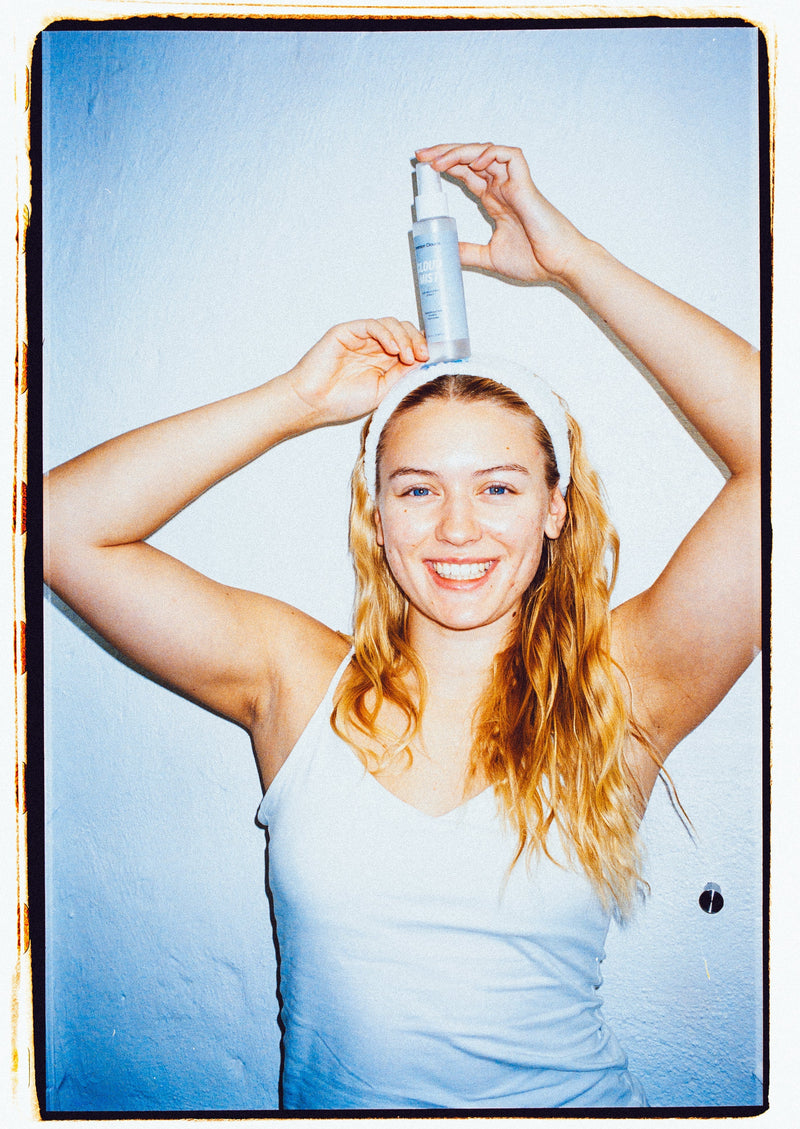
What does hypochlorous do?
In skincare – such as Cloud Mist – lab-made hypochlorous acid has several effects, such as:
- Antibacterial – Helpful for acne and breakouts
- Anti-inflammatory – Soothing and reduces redness and swelling
- Restoring – Helps compromised skin back to balance
Including hypochlorous acid into your skincare routine can lead to calmer and clearer skin, especially for those dealing with acne, rosacea, or increased sensitivity. Its gentle yet effective properties make it a revolutionary ingredient in modern skincare!
How and when do I use hypochlorous acid?
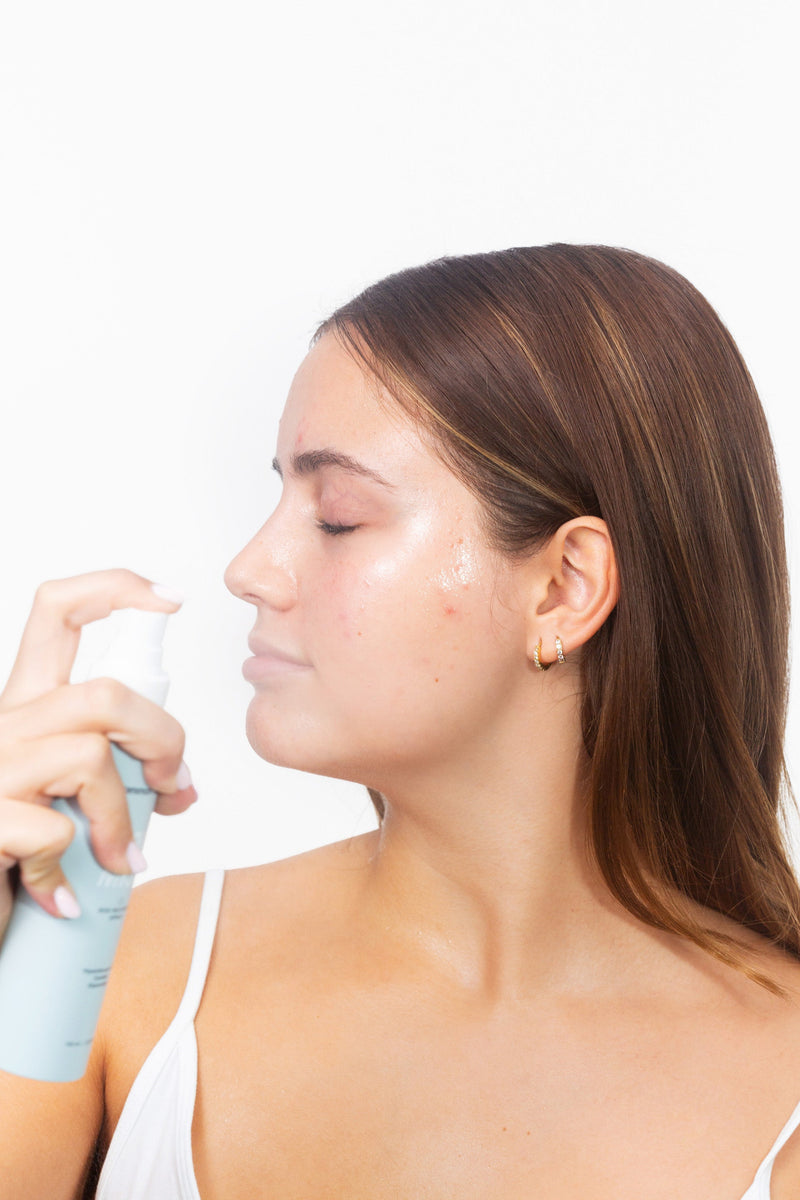
Using hypochlorous acid in a mist, like Cloud Mist, couldn't be any more simple. Generously mist over face or other troubled areas anywhere on your body after cleansing. Let dry, and follow with your usual skincare routine.
Repeat as often as needed throughout the day. Cloud Mist perfect rescue-on-the-go-product!
Will hypochlorous acid help acne?
It certainly can! Hypochlorous acid, like Cloud Mist, is perfect for anyone struggling with acne or breakouts. Hypochlorous acid is often called "the gentle acne fighter" because it has both antibacterial and anti-inflammatory effects on skin, which helps both the breakout itself, and the redness and swelling in the area.
Even if you're on acne medication, you can still use Cloud Mist, as it's suitable for weakened and sensitive skin.
Can I combine hypochlorous acid with all other skincare ingredients?
Hypochlorous acid is a universal, versatile ingredient that fits into all routines – with one exception! Hypochlorous acid has an oxidising effect that counteracts active antioxidants, such as vitamin C. Simply put, it can cancel out the effects of concentrated antioxidant products.
Therefore, hypochlorous acid shouldn’t be used together with active antioxidants, like Vitamin C. Vitamin C-serums and other top notch-antioxidants tend to be quite pricy, so while using hypochlorous acid with antioxidants won't do your skin any harm, it will be a waste of money.
Luckily, it's simple to get the best of two worlds from both vitamin C/antioxidants and hypochlorous acid. Simple allow a few hours between concentrated antioxidants and hypochlorous acid. We love using vitamin C-serum in the morning to shield the skin from free radical damage throughout the day, and therefore we wait a few hours before misting Cloud Mist.
Except for vitamin C and other strong antioxidants, hypochlorous acid can be used with all other ingredients. Continue scrolling for some of our perfect pairings!
Will hypochlorous acid cancel out vitamin C-products?
Yes. See the answer above. Using hypochlorous acid with concentrated vitamin C-products will cancel out the antioxidant effect of the vitamin C.
Keep Cloud Mist and strong vitamin C-products (like concentrated antioxidant serums) in separate routines since they can cancel each other out.