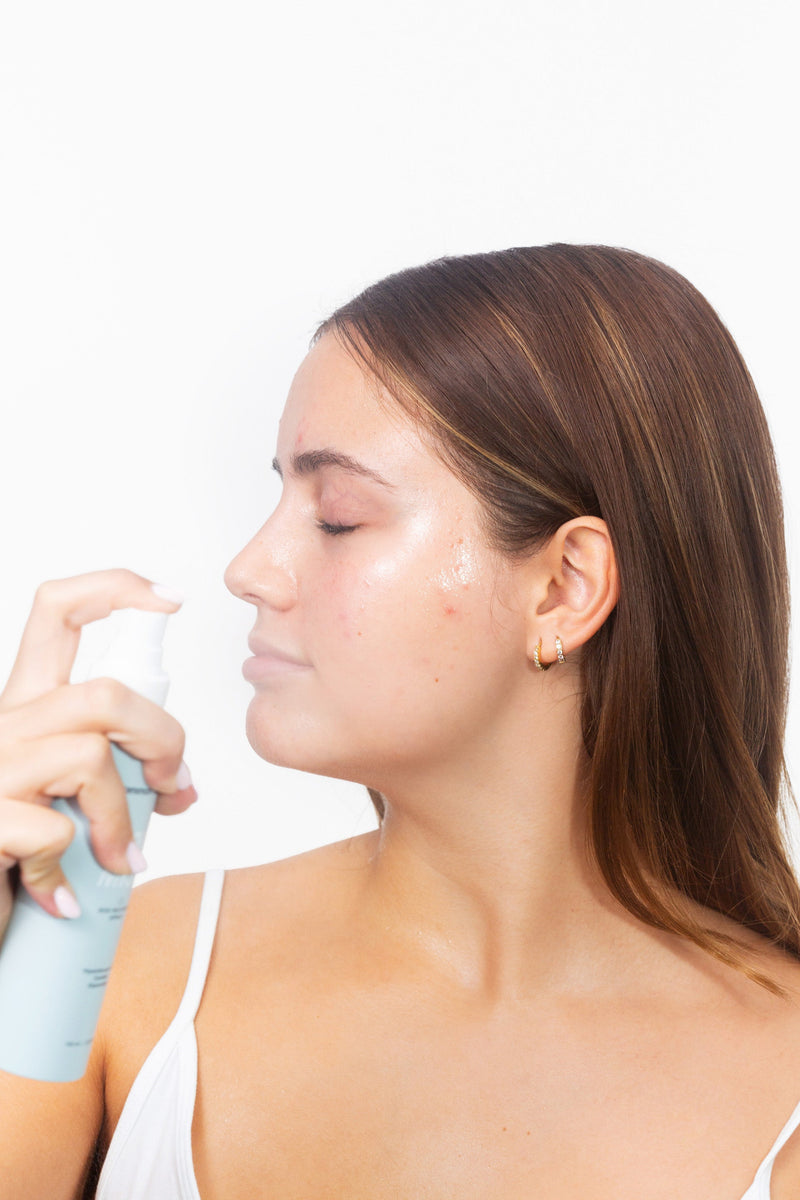
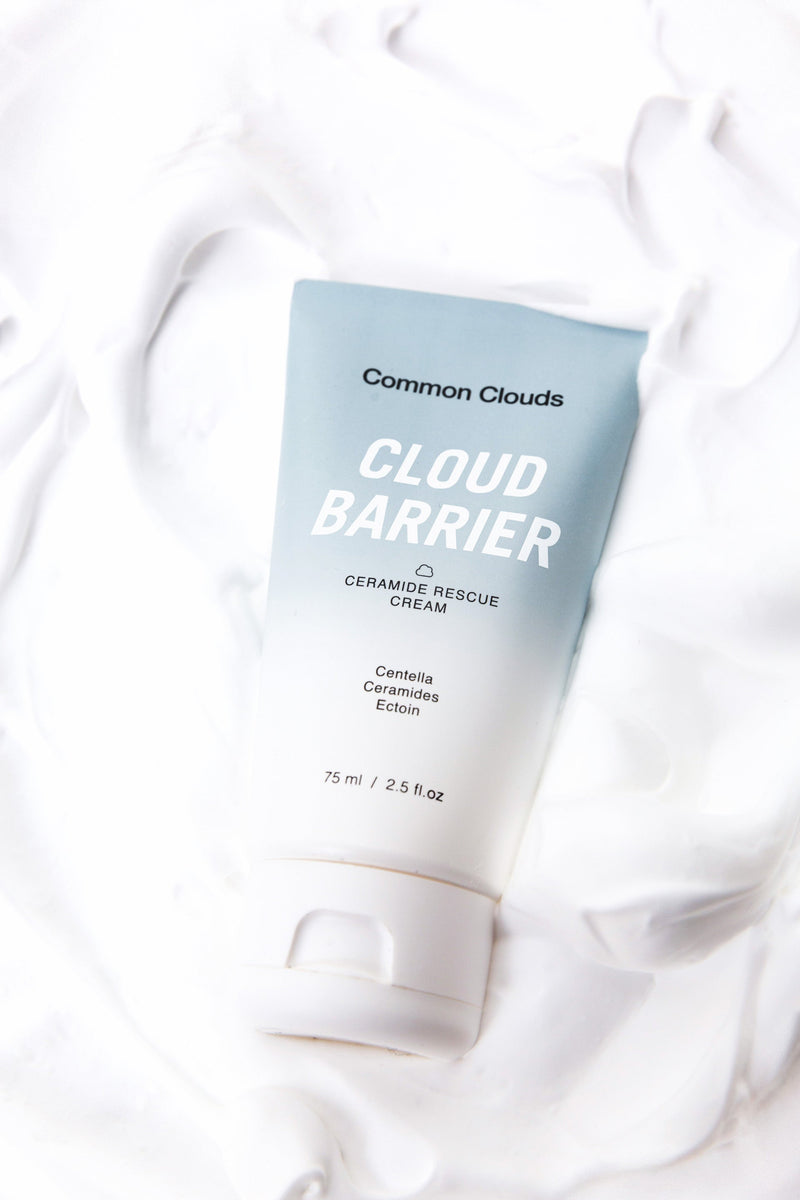
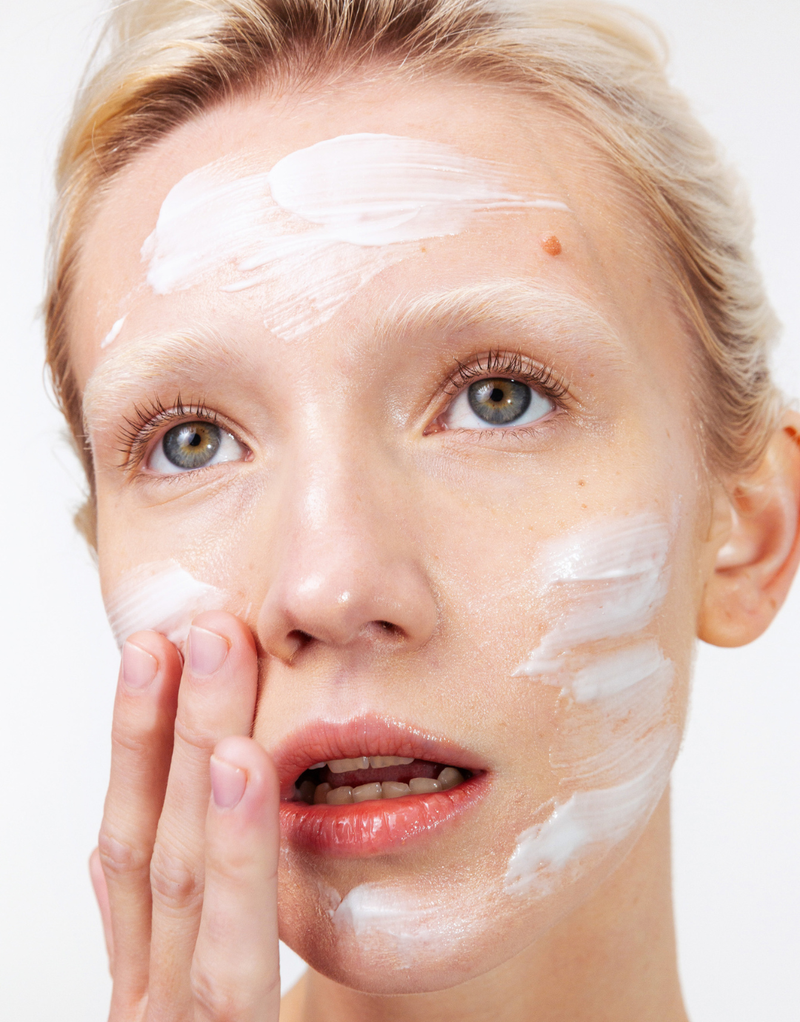
At Common Clouds, barrier health is the guiding star in everything we do. Because when the skin barrier is strong, skin works.
Written by Maria Ahlgren
This is our deep dive into the skin barrier: why it breaks down so often today, how to recognise the signs of a damaged barrier and how we at Common Clouds think when we formulate products to build skin – not stress it or fight against it.
The skin barrier – your skin’s living raincoat
The skin barrier is the outermost layer of the skin and the body’s first line of defense. It works like an intelligent, living raincoat.
- 💦 It keeps moisture and nutrients in
- ✋ It protects against bacteria, pollution and irritation ✋
When the barrier is intact, skin feels calm, supple and balanced. When it’s damaged, moisture escapes, irritants get in and inflammation takes hold.
This is where many skin issues begin. Acne that won’t heal, rosacea flare-ups, perioral dermatitis that never quite settles or skin that suddenly “can’t tolerate anything”.
Why our skin barriers are under more pressure than ever
We love that skincare has become more accessible, nerdy and fun. But the past decade has also brought more active ingredients, more steps in routines and more products that exfoliate or stimulate cell turnover – often at the same time.
Add air pollution, stress, lack of sleep, screen time (aah the doomscroll!), UV exposure and a harsh Nordic climate in our native Sweden, and you have the perfect storm for a weakened skin barrier.
Every so often, a story goes viral on TikTok calling out one product as “the thing that destroyed my skin barrier.” And while some skincare products really can be too harsh (think heavy fragrance or strong surfactants), what we often see isn’t one single product causing the damage – it’s too much of what’s “good,” all at the same time.
The skin barrier – how it actually works
To understand how to repair the barrier, we first need to understand what it’s made of.
1. The stratum corneum – the brick wall 🏚️
The outermost layer of the skin, the stratum corneum, consists of dead, keratin-filled skin cells packed tightly together and surrounded by lipids. It’s often described as a brick wall, where the cells are the bricks and the lipids are the mortar.
When the mortar breaks down, the wall becomes unstable and the skin more vulnerable.
2. The lipid barrier – the mortar 🚧
The lipids mainly consist of ceramides (about 50 percent), cholesterol, and fatty acids.
This is why we at Common Clouds are so focused on lipid composition, not just “any oil”. The barrier requires the right building blocks in the right proportions.
3. Natural Moisturizing Factors (NMFs) – the hydrators 💦
The skin’s own moisture-binding components (amino acids, lactic acid and urea) that ensure the skin isn’t just coated, but truly hydrated on a deeper level.
4. The acid mantle 🦸
A thin, slightly acidic film with a pH of around 5–5.5 that protects against harmful microorganisms. When pH is disrupted, both the barrier and the microbiome are affected.
5. The microbiome 🦠
Consists of billions of bacteria and fungi that protect the skin, regulate inflammation and keep harmful bacteria in check. A disrupted microbiome is closely linked to acne, rosacea and hypersensitivity.
As you can see, it's a complex but glorious eco-system.
Signs of a damaged skin barrier
So, how do we recognise a damaged barrier? Here's the most common signs.
- Skin feels tight or dry despite using moisturiser.
- Redness, stinging or burning sensations.
- Itching or irritation.
- Acne that suddenly worsens.
- Oily yet dehydrated skin and surface dryness.
- Reactions to products that previously worked well.
Why does the skin barrier break down?
Some people are born with a more sensitive barrier, but most often it’s due to external stressors – usually in combination.
Common causes of a weakened barrier include:
- Over-exfoliation with acids, retinoids or dermaplaning
- Cleansers with sulfates SLS/SLES or a high pH
- Too many active ingredients at once
- Fragrance and essential oils
- Cold, windy weather and constant mini climate changes between outside and inside air
- Long-term stress.
- Hormonal fluctuations.
- Illness or certain medications.
How we repair the skin barrier – the Common Clouds philosophy
Less – but better
When skin is out of balance, we always scale back. Cleanse, moisturise, protect. That's the basics! (Our kit Barrier Besties + Cloud Screen is the perfect base camp!).
Ultra-gentle cleansing
Cleansers should never feel stripping, they should feel calming. That’s why we avoid sulfates, fragrance and high pH in our gentle, barrier-friendly cleanser, Cloud Wash.
Rest from exfoliation
It’s not just acids that exfoliate. Retinoids, shaving and some cleansers do too. A damaged barrier needs calm, not stimulation.
Build with lipids
Hydration is important, but without ceramides, fatty acids and cholesterol, the barrier can’t repair itself. We use an advanced ceramide system in several products, including Cloud Barrier and Cloud Glaze.
Protect when skin is vulnerable
When the barrier is severely compromised, skin may need a temporary extra protective layer – a so called oclusive – that reduces moisture loss while it heals. Cloud Barrier acts like a cloud-light protective veil on your skin.
Stress management is skincare
Cortisol indirectly affects barrier function. Recovery is physiology, not fluff.
Ingredients we love for the skin barrier
- Ceramides – the foundation of the barrier.
- Squalane – skin-identical and barrier-friendly.
- Ectoin – protects, binds moisture, and supports the microbiome.
- Niacinamide – boosts the skin’s own ceramide production.
- Glycerin – a reliable and effective humectant.
- Panthenol (vitamin B5) – repairing and soothing.
- Oats – anti-inflammatory and microbiome-supporting.
- Dimethicone – reduces moisture loss in compromised skin.
How long does it take to repair the skin barrier?
It's individual, but a few rule of thumbs are:
After 2–3 weeks, skin often feels calmer.
After 1–2 months, the barrier is usually back in balance.
In more severe cases, it can take up to 6 months.
The skin barrier is alive and capable of healing – but it requires patience.
Damaged barrier or purge?
Not all reactions mean barrier damage. When introducing new acids or retinoids, skin may temporarily become drier or experience more breakouts – a so-called purge.
Persistent stinging, burning, and irritation are more often signs of a compromised skin barrier.
Skin barrier repair – the quick guide summary
Couldn't bother reading the whole thing? No worries, here's a quick summar!
If your skin feels tight, stingy, inflamed or suddenly reacts to everything, your barrier may be compromised. Here’s what to do:
-
Stop exfoliating + actives for at least 7–14 days (acids, retinoids, scrubs)
-
Use a gentle cleanser (or cleanse once daily)
-
Moisturise with barrier lipids (ceramides + fatty acids + cholesterol)
-
Protect daily with SPF
-
Keep your routine simple for at least 2–4 weeks