What is hypochlorous acid (and why is everyone talking about it)?
Hypochlorous acid – also known as HOCI – is a gentle, non-exfoliating acid with anti-inflammatory and antimicrobial properties. In fact, HOCI is naturally produced by our white blood cells as part of the body's defense system to protect us against harmful bacteria and to aid wound healing.
What function does hypochlorus acid have in skincare?
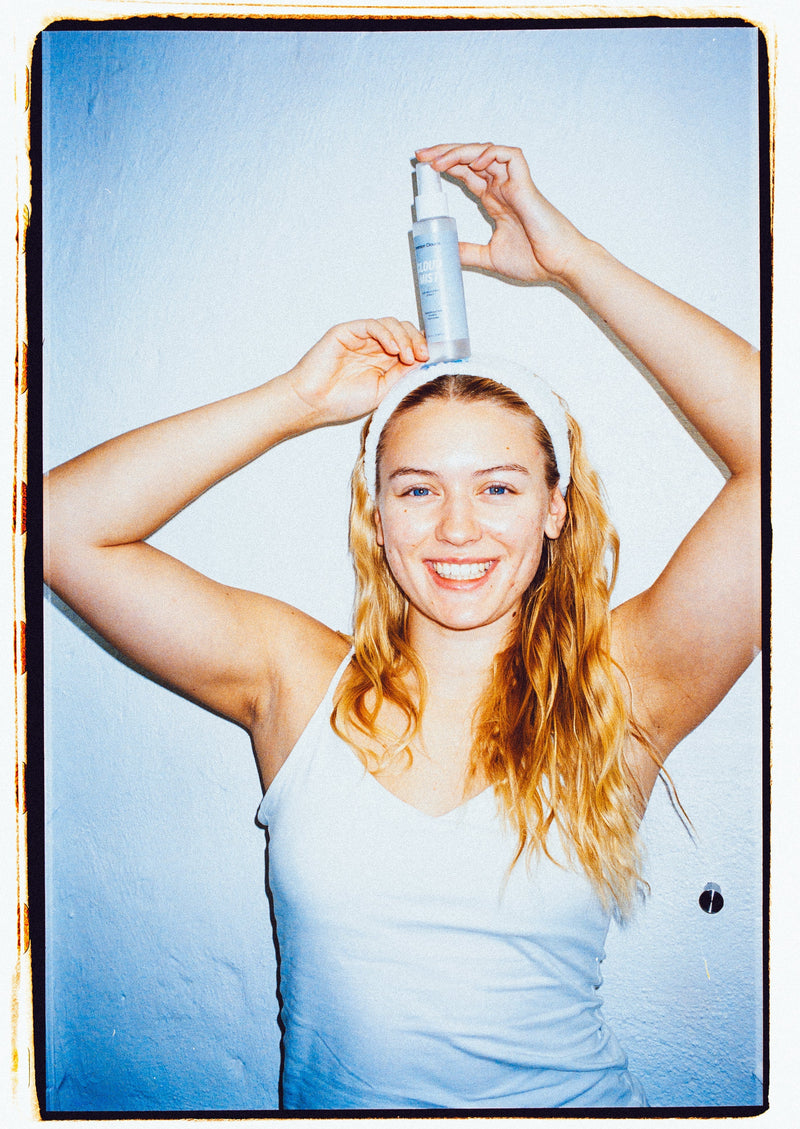
In skincare – such as Cloud Mist – lab-made hypochlorous acid has a purifying, restoring and protective effect. Including hypochlorous acid into your skincare routine can lead to calmer and clearer skin, especially for those dealing with acne, rosacea, or increasedsensitivity. Its gentle yet effective properties make it a revolutionary ingredient in modern skincare!
Why is hypochlorus acid good for skin with acne?
For people with acne, hypochlorous acid is an effective yet gentle solution. HOCl works by neutralising harmful bacteria, particularly P. acnes, a leading cause of acne breakouts. Additionally, its anti-inflammatory action helps to reduce redness and swelling, speeds up the healing of existing blemishes and prevents future breakouts without irritating the skin.
Is hypochlorus acid good for skin with rosacea?
Yes! HOCl's gentle nature makes it helpful for soothing inflammation and helping to minmise flare-ups. By reducing skin irritation and calming redness, HOCl can help manage rosacea symptoms over time.
How often can you use hypochlorous acid?
There’s no strict upper limit, but for most people, using hypochlorous acid two to three times a day works well. We love using it after cleansing and throughout the day whenever the skin needs calming or refreshing.
Cloud Mist is ideal to keep in your gym bag, school bag, on your desk or in your carry-on when traveling.
Does hypochlorous acid affect the skin’s good bacteria?
No. The hypochlorous acid in Cloud Mist works selectively against unwanted microorganisms, such as acne-causing bacteria, without disrupting beneficial bacteria. In fact, it can help support the skin’s natural microbiome.
Can hypochlorous acid be combined with other skincare ingredients?
Hypochlorous acid fits into most skincare routines, with one exception. Because hypochlorous acid has an oxidizing effect, it should not be used at the same time as strong antioxidants such as vitamin C (ascorbic acid). Use them at different times of day and allow a few hours in between.
Is hypochlorous acid safe during pregnancy and for children?
Yes. Hypochlorous acid is an extremely gentle ingredient that the body naturally produces. It is free from fragrance, alcohol and harsh actives, making it suitable for all skin types, all ages, and safe to use during pregnancy.
SHOP CLOUD MIST
SHOP CLOUD MIST